Buy rcals.com ?
We are moving the project
rcals.com .
Are you interested in purchasing the domain
rcals.com ?
domain@kv-gmbh.de · 0541-91531010
Buy rcals.com ?
How do I calculate percentages of percentages?
To calculate percentages of percentages, you first convert the percentages into decimals by dividing by 100. Then, multiply the two percentages together to get the final percentage. For example, if you want to find 20% of 50%, you would first convert 20% to 0.20 and 50% to 0.50. Then, multiply 0.20 by 0.50 to get 0.10, which is 10% of the original value. **
Is the C-rating important for flying FPV drones with LiPo batteries?
Yes, the C-rating is important for flying FPV drones with LiPo batteries. The C-rating indicates the maximum continuous discharge rate of the battery, which is crucial for providing the necessary power to the drone's motors during flight. Choosing a LiPo battery with a sufficient C-rating ensures that the battery can deliver the required current without being overtaxed, which can lead to voltage sag and reduced performance. Therefore, it is important to consider the C-rating when selecting a LiPo battery for FPV drone flying. **


Similar search terms for Percentages
Top-Angebote
Products related to Percentages:


-
Why are percentages reversible?
Percentages are reversible because they represent a proportional relationship between two quantities. For example, if 20% of a quantity is 40, then 40 is 20% of the quantity. This reversibility is a fundamental property of percentages and allows for easy conversion between percentages and their corresponding values. It also makes it possible to calculate the original quantity when given the percentage and the resulting value. **
-
How do you calculate percentages?
To calculate percentages, you first need to determine the total value or amount you are working with. Then, you divide the part you are interested in by the total value. Finally, multiply the result by 100 to get the percentage. For example, if you want to find out what percentage 25 is of 100, you would divide 25 by 100 (0.25) and then multiply by 100 to get 25%. **
-
Does Excel calculate percentages incorrectly?
Excel does not calculate percentages incorrectly. However, sometimes users may encounter issues with percentage calculations if the data is not formatted correctly or if there are errors in the formulas. It is important to ensure that the data is entered accurately and that the formulas are set up correctly to get accurate percentage calculations in Excel. **
-
How can one simplify percentages?
One way to simplify percentages is to convert them into fractions or decimals. For example, 25% can be simplified to 1/4 or 0.25. Another way is to use basic math operations such as multiplication and division. For instance, to find 20% of a number, you can multiply the number by 0.2. Lastly, it can be helpful to use common percentages as reference points, such as knowing that 50% is equal to half or 10% is equal to one-tenth. **


How do you add percentages?
To add percentages, you first convert each percentage to a decimal by dividing by 100. Then, you add the decimals together. Finally, convert the sum back to a percentage by multiplying by 100. For example, if you want to add 20% and 30%, you would convert them to decimals (0.20 and 0.30), add them (0.20 + 0.30 = 0.50), and then convert the sum back to a percentage (0.50 x 100 = 50%). **
How do I calculate percentages?
To calculate a percentage, you first need to determine the total value of the data set you are working with. Then, you divide the specific value you are interested in by the total value and multiply by 100. This will give you the percentage of the specific value in relation to the total value. For example, if you have 20 apples out of a total of 100 fruits, the percentage of apples would be (20/100) * 100 = 20%. **
Top-Angebote
Products related to Percentages:
-
How do I calculate percentages of percentages?
To calculate percentages of percentages, you first convert the percentages into decimals by dividing by 100. Then, multiply the two percentages together to get the final percentage. For example, if you want to find 20% of 50%, you would first convert 20% to 0.20 and 50% to 0.50. Then, multiply 0.20 by 0.50 to get 0.10, which is 10% of the original value. **
-
Is the C-rating important for flying FPV drones with LiPo batteries?
Yes, the C-rating is important for flying FPV drones with LiPo batteries. The C-rating indicates the maximum continuous discharge rate of the battery, which is crucial for providing the necessary power to the drone's motors during flight. Choosing a LiPo battery with a sufficient C-rating ensures that the battery can deliver the required current without being overtaxed, which can lead to voltage sag and reduced performance. Therefore, it is important to consider the C-rating when selecting a LiPo battery for FPV drone flying. **
-
Why are percentages reversible?
Percentages are reversible because they represent a proportional relationship between two quantities. For example, if 20% of a quantity is 40, then 40 is 20% of the quantity. This reversibility is a fundamental property of percentages and allows for easy conversion between percentages and their corresponding values. It also makes it possible to calculate the original quantity when given the percentage and the resulting value. **
-
How do you calculate percentages?
To calculate percentages, you first need to determine the total value or amount you are working with. Then, you divide the part you are interested in by the total value. Finally, multiply the result by 100 to get the percentage. For example, if you want to find out what percentage 25 is of 100, you would divide 25 by 100 (0.25) and then multiply by 100 to get 25%. **
Similar search terms for Percentages
-
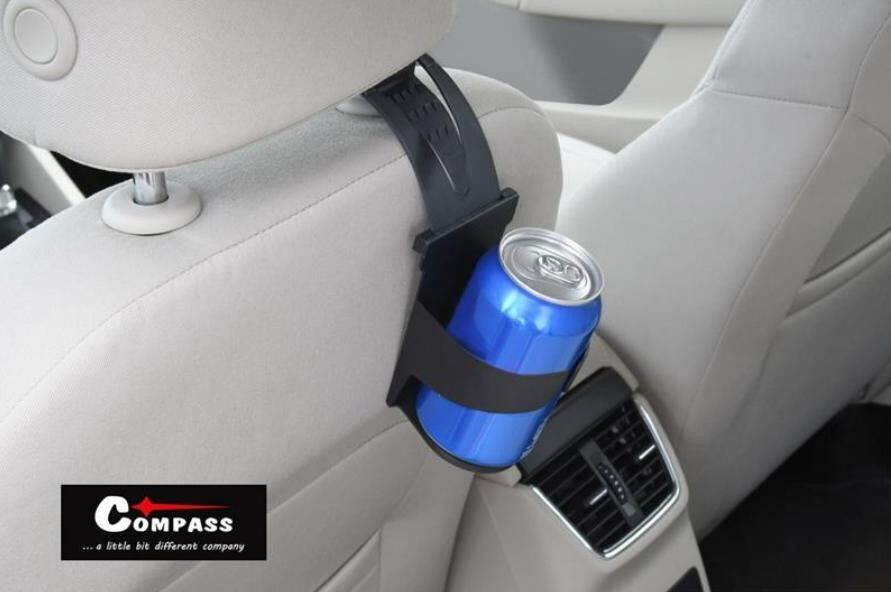
Compass Accessories 074250 Adapter, zapalovacDodávka energie: zástrčka pro autozapalovač; Napětí [V]: 12, 24; Konektory/Zástrčky: Car cigarette socket; Zatížení při 12V: 60W; Zatížení při 24V: 120W; Délka kabelu [m]: 3; Doplňující výrobek / doplňkové info 2: se zajištěním; Intenzita el. proudu [A]: 5185,99 CZK*Shipping: 235,00 CZKSecure redirect to the provider
-
Does Excel calculate percentages incorrectly?
Excel does not calculate percentages incorrectly. However, sometimes users may encounter issues with percentage calculations if the data is not formatted correctly or if there are errors in the formulas. It is important to ensure that the data is entered accurately and that the formulas are set up correctly to get accurate percentage calculations in Excel. **
-
How can one simplify percentages?
One way to simplify percentages is to convert them into fractions or decimals. For example, 25% can be simplified to 1/4 or 0.25. Another way is to use basic math operations such as multiplication and division. For instance, to find 20% of a number, you can multiply the number by 0.2. Lastly, it can be helpful to use common percentages as reference points, such as knowing that 50% is equal to half or 10% is equal to one-tenth. **
-
How do you add percentages?
To add percentages, you first convert each percentage to a decimal by dividing by 100. Then, you add the decimals together. Finally, convert the sum back to a percentage by multiplying by 100. For example, if you want to add 20% and 30%, you would convert them to decimals (0.20 and 0.30), add them (0.20 + 0.30 = 0.50), and then convert the sum back to a percentage (0.50 x 100 = 50%). **
-
How do I calculate percentages?
To calculate a percentage, you first need to determine the total value of the data set you are working with. Then, you divide the specific value you are interested in by the total value and multiply by 100. This will give you the percentage of the specific value in relation to the total value. For example, if you have 20 apples out of a total of 100 fruits, the percentage of apples would be (20/100) * 100 = 20%. **
* All prices are inclusive of VAT and, if applicable, plus shipping costs. The offer information is based on the details provided by the respective shop and is updated through automated processes. Real-time updates do not occur, so deviations can occur in individual cases. ** Note: Parts of this content were created by AI.